Books

These books are the work of more than a decade spent asking a single question: what happens to leaders and institutions when the pace of events outstrips the capacity to make meaning from them?

Some answer directly — defining the framework, naming the conditions, building the architecture. Others explore the same territory through different doors: empathy, curiosity, creativity, narrative, stillness.

Together, they form a coherent body of work. They are not interchangeable.

‍

Threshold Canon

These books directly develop the Threshold canon. They are structural rather than illustrative. They define, refine, and reinforce one another.

Inheritance: An Emerging Ecology of Leadership
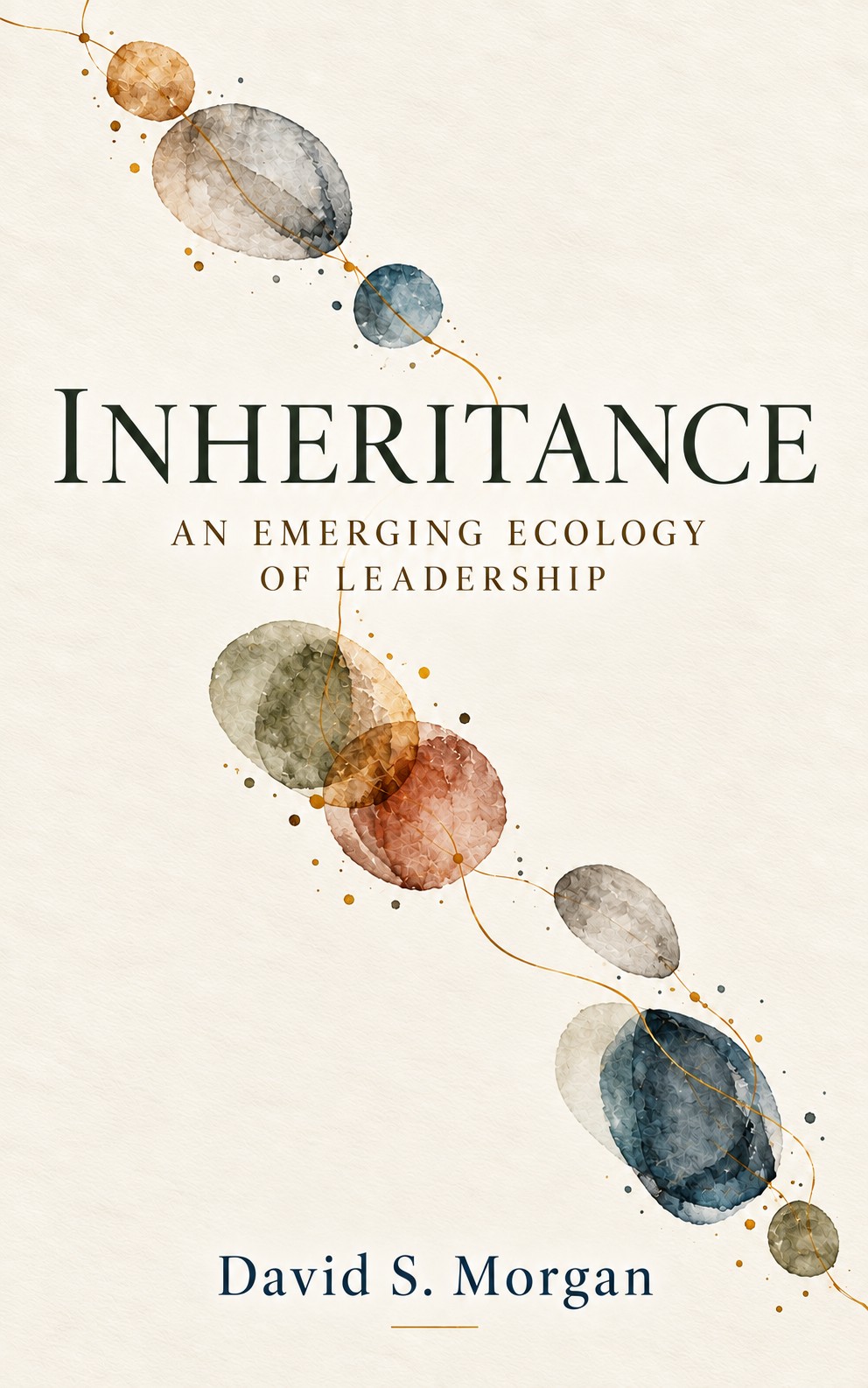
Every leader inherits an organization. Every leader leaves one. What matters most is rarely what gets counted. What remains after a leader departs, and how do the conditions they leave behind shape what others can accomplish? In INHERITANCE, David S. Morgan explores leadership through a different lens: not simply the results leaders produce, but the enduring conditions they create, alter, and pass on. Drawing on richly documented cases from organizations including LEGO, Nucor, NASA, and Toyota, he examines how routines, authority, institutional memory, and hidden dependencies continue shaping organizations long after their original architects have departed. Organized around five movements, Inherit, Alter, Reveal, Regenerate, and Leave, Morgan develops a compelling view of leadership as an ecology of conditions that successive generations receive and reshape. Drawing on decades of experience as a chief executive and organizational leader, he asks whether those who inherit our work retain the ability to question, adapt, and improve what we leave behind. Written for executives, boards, founders, successors, and anyone entrusted with an organization's future, INHERITANCE offers a thoughtful reconsideration of leadership, stewardship, and lasting organizational impact. The work of leadership is not finished when the result is produced. It continues in what the result leaves other people able, required, and permitted to do. What are you leaving in motion?
Read blog

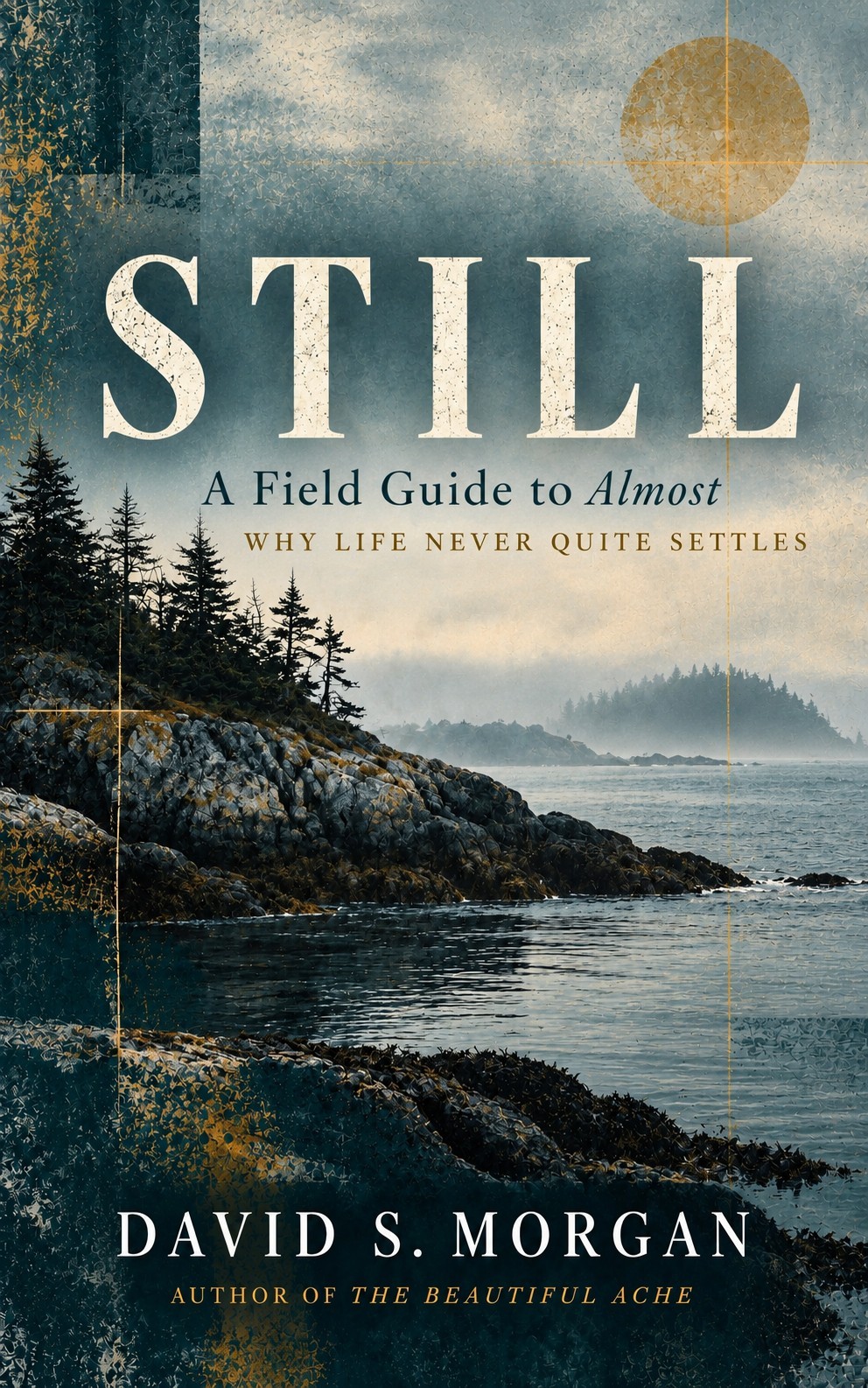
STILL: A Field Guide to Almost

STILL Why does life never quite settle, even when it is going well? Why does achieving what we wanted so often leave us wondering why life still feels unfinished? In STILL, David S. Morgan challenges the familiar belief that a well-lived life eventually reaches a place of lasting satisfaction. Following four fictional lives through everyday experiences and significant turning points, he explores why accomplishment, security, and even happiness rarely deliver the permanence we expect. Drawing on psychology, research into human motivation, and the experience of flow, Morgan examines the distance between what we expect life to feel like and what we actually experience. He reveals how restlessness can become valuable information rather than evidence that something is wrong, and how a more engaged relationship with life emerges when we stop treating contentment as a final destination. Neither a conventional self-help book nor a collection of prescribed exercises, STILL offers a thoughtful exploration of fulfillment, expectation, and the possibilities of living meaningfully within a life that never stops changing. The beauty was never on the other side of it. It is in the middle.
Read blog

Exercising Agency: Five Practices for Making Your Actions More Fully Your Own

### Exercising Agency **A day can be full, responsible, productive, and largely uninhabited.** How often do we make decisions, fulfill obligations, and move through our days without being fully present in the choices carrying our names? In *Exercising Agency*, David S. Morgan explores the subtle difference between acting and being genuinely present in our actions. Drawing on organizational psychology, everyday experience, and the relationship between authority, judgment, and answerability, he examines how easily responsible behavior can become automatic, leaving our capacity for meaningful choice quietly diminished. Through five practical disciplines, **Notice, Interrupt, Gather, Act, and Remain**, Morgan offers a way to recognize decisions as they happen, interrupt habitual responses, make choices within our actual circumstances, and remain accountable for what follows. Neither a conventional self-help book nor a promise of greater control, *Exercising Agency* offers a thoughtful, practical approach to recovering our presence in ordinary life, even when our options are limited and circumstances remain unchanged. **Agency does not require that the world move differently every time. It requires that when something moves through us, someone is there.**
Read blog

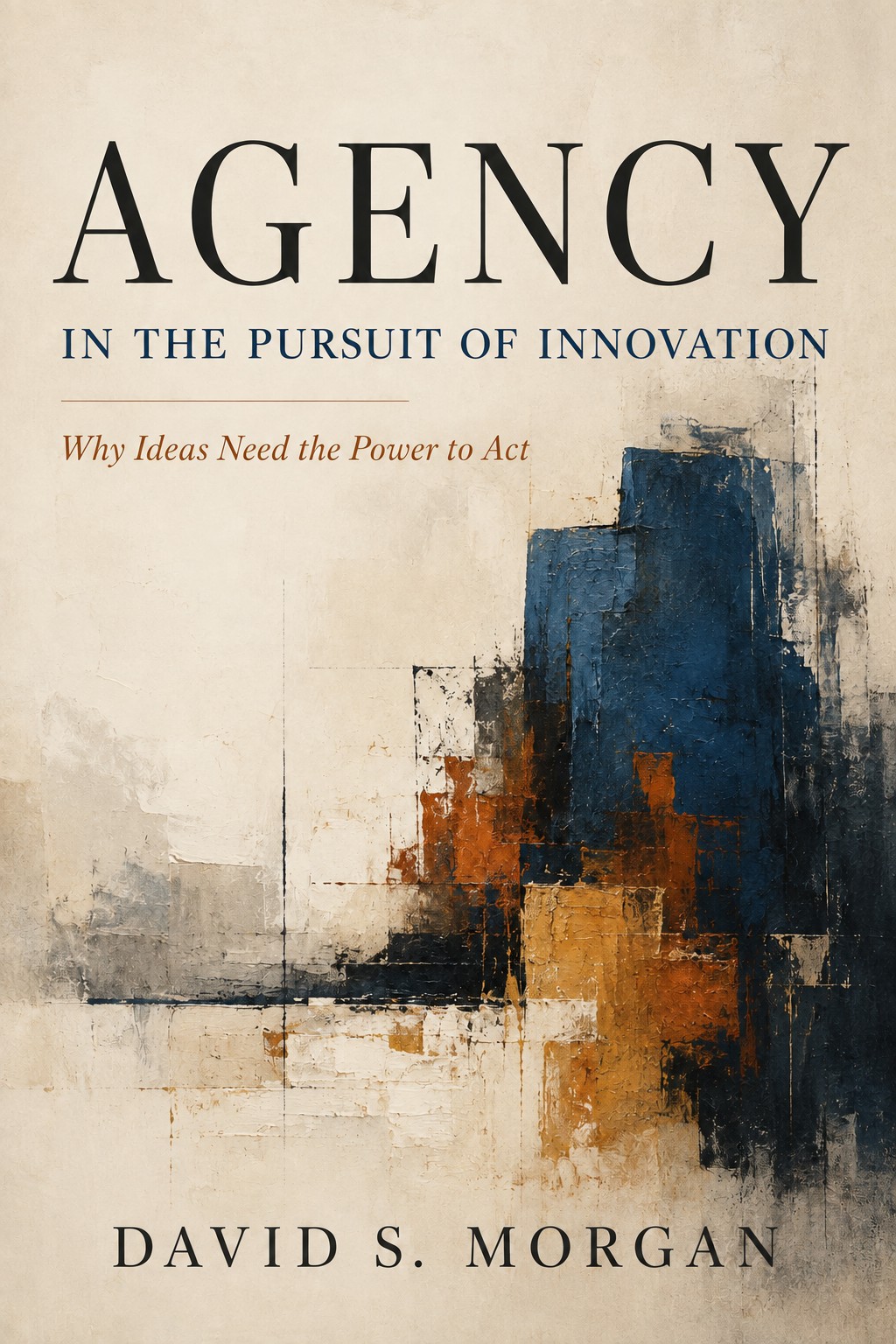
Agency in the Pursuit of Innovation

### Agency in the Pursuit of Innovation **Your organization does not have an idea problem.** Why do capable people in well-run organizations so often struggle to turn promising ideas into meaningful action? In *Agency in the Pursuit of Innovation*, David S. Morgan argues that innovation is a governance problem before it is a creativity problem. Drawing on historical cases, organizational research, and three decades of executive leadership, he explores six conditions that determine whether people can act on what they see: **Standing, Judgment, Permission, Discretion, Resources, and Answerability.** Morgan reveals how ordinary management practices, often reasonable in isolation, quietly suppress initiative, delay experimentation, and separate people from the consequences of their own discoveries. He then examines how leaders can build organizations where responsible action becomes possible without requiring permission at every turn. Featuring the practical fifteen-stage **Agency Test**, the book offers executives, managers, and organizational leaders a way to identify precisely where promising possibilities lose momentum and what must change to move them forward. **Innovation begins not when someone has an idea, but when someone has the agency to act on it.**
Read blog

When the Room Decide: How Communities Turn What They Know Into Durable Action
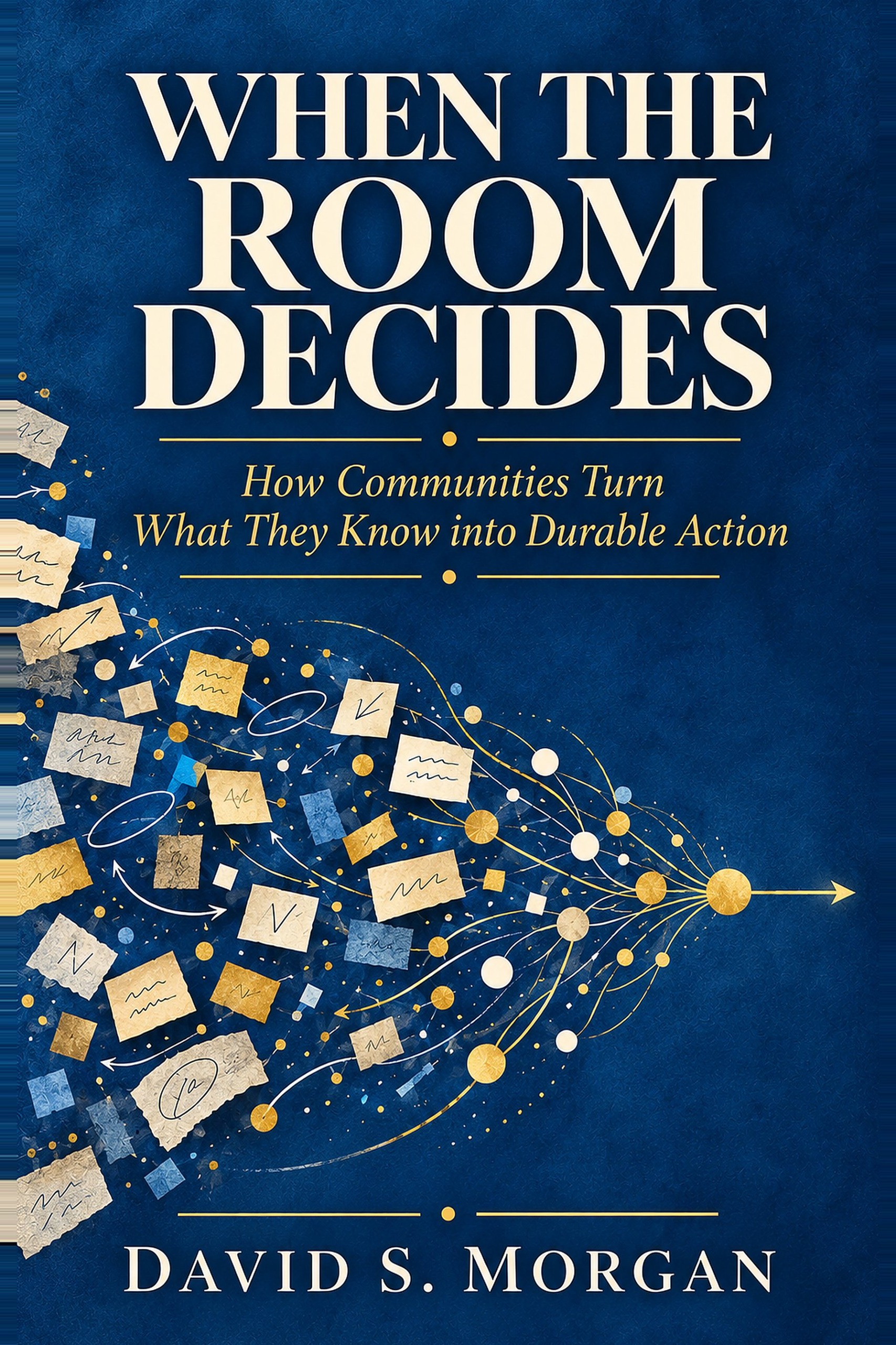
When the Room Decides The room came alive. Then everyone went home. Why do gatherings filled with extraordinary ideas so often produce so little lasting change? In When the Room Decides, David S. Morgan explores the missing architecture between collective insight and sustained action. Drawing on a firsthand account of sixty people gathering in New Hampshire’s North Country, alongside nine historical and contemporary cases, he identifies four essential elements that help communities turn possibility into progress: Voice, Visibility, Commitment, and Return. Blending lived experience, research, and practical insight, Morgan examines how communities make shared knowledge visible, translate ideas into commitments, and build the structures needed to carry meaningful work forward. A compelling exploration for community leaders, nonprofit executives, facilitators, and anyone working to turn collective possibility into lasting change. The room can discover what matters. What happens afterward determines whether that discovery endures.
Read blog

Holding: An Ancient Discipline for Modern Practice
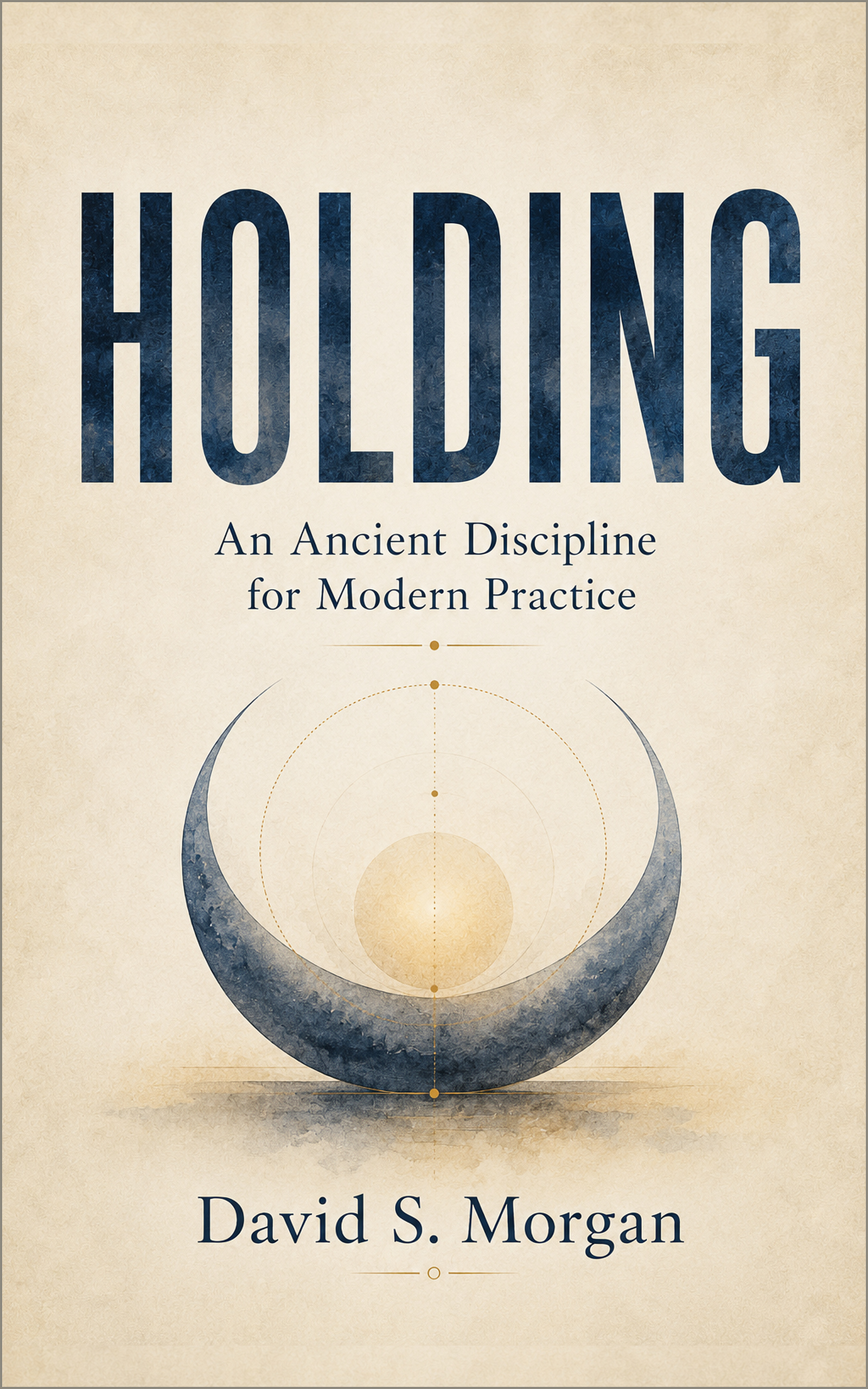
There is a thing in the chest before there is a sentence. You have felt it. In the meeting that was going well, when something you noticed did not quite fit. In the conversation with someone you love, when the fluent reply was already forming before you had finished listening. In the half-second before the email you would spend three days managing. A pressure, slightly left of center. A sense that the version of the matter being decided was not the version the matter actually was. The culture has a hundred words for what you say once that pressure has been converted into a sentence. It has almost none for the pressure itself, or for the discipline of staying with it. That discipline has a name. The name is holding. Holding is the practice of letting a situation become what it actually is before you respond to it. It is not slowness. It is not delay. It is not patience as it is usually understood. It is the willingness to remain accurate to what is arriving, in the moments when nearly every incentive favors arriving at something smoother and sooner. David S. Morgan learns the discipline by attending closely to seven people who practiced it under pressure no room should ask anyone to carry: Susan La Flesche Picotte, Nainoa Thompson, Wanda Díaz-Merced, Fatema Mernissi, Ailton Krenak, Wangari Maathai, and Sequoyah. Each held a response open in a world built to foreclose it. Their chapters are grounded in the documented record at every factual claim, and the book is honest, each time, about where it imagines and where it does not. This is not a leadership book in the conventional sense, though leaders will find what they need in it. It is not self-help, not history, not biography. It is an extended act of attention, written from inside the rooms where this discipline is either practiced or failed, and offered in the spirit of an apprentice's report. It is for the reader who has felt the half-formed concern compressed into the smaller sentence, and walked into the afternoon with the unsaid portion still there. The reader who has begun to suspect that the practice of remaining accurate to what is arriving has a name, and that the name has been kept from them. That practice has a name. The name is holding.
Read blog

Answerability: Who Answers When AI Acts? Power, Consequence, and Leadership
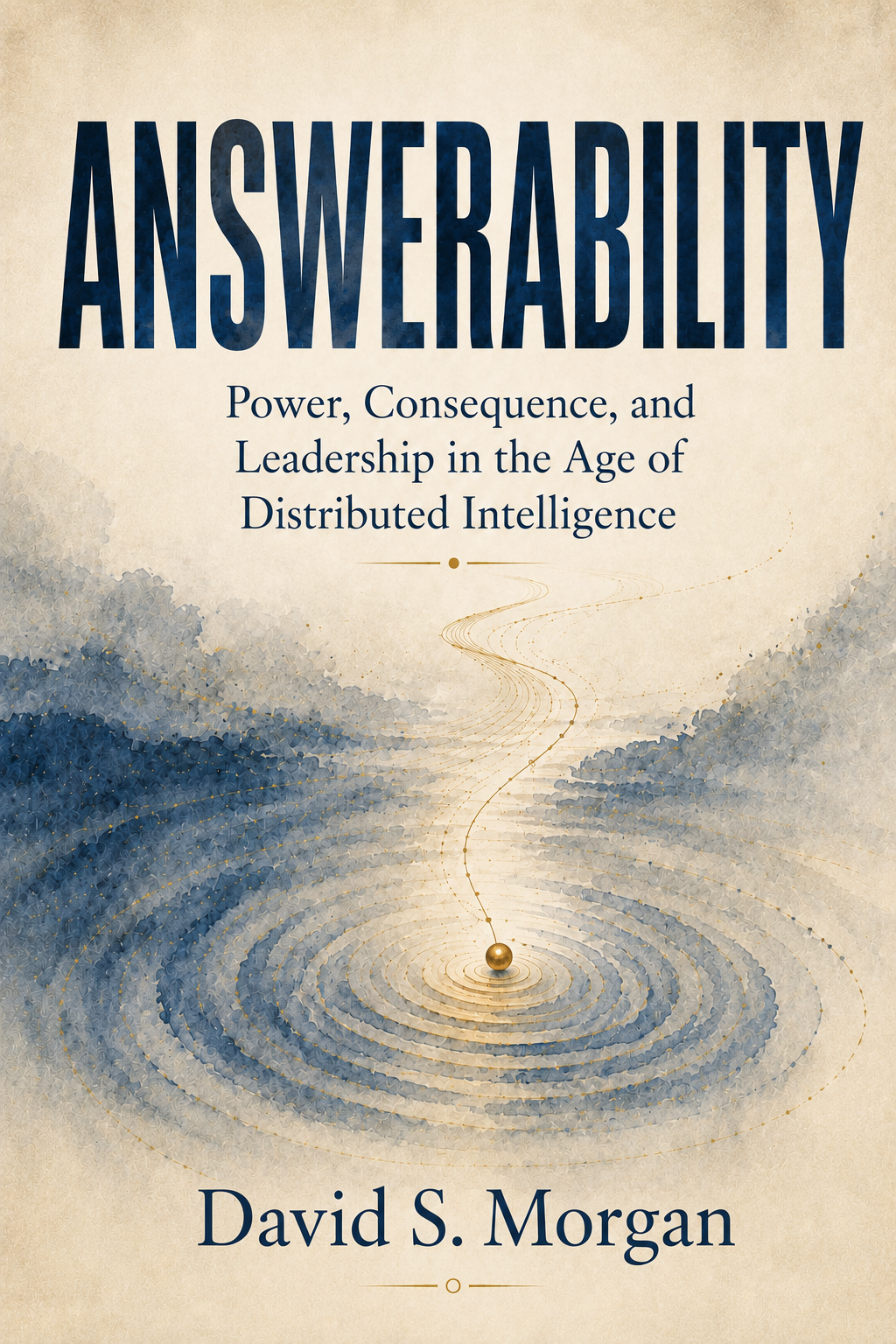
The machine can act. That is settled now. The question is who answers. Artificial intelligence no longer waits to be executed. It plans, decides, moves money, changes records, and acts at machine speed inside institutions that authorized it in general and cannot supervise it in particular. When something goes wrong, the search for who must answer turns up a chain of people pointing at a system, and a system that cannot bear anything at all. In Answerability, David S. Morgan argues that this gap is older than the machines. Organizations learned to separate deciding from bearing long before any system could act on its own. What the agentic turn changes is not the existence of the gap but its speed and its finality. Whatever answerability survives it is answerability someone built. Through fifteen public figures treated as fault lines rather than profiles, from the laboratory to the chip to the constitution written for a machine, the book follows consequence as it slips loose: dashboards that stay green over real harm, signatures that arrive after the deciding is done, warnings that are punished, infrastructure that hides its weight. Then it shows what keeping answerability actually requires of leaders, boards, and the people who authorize what they cannot fully control. A closing section, For the Room, distills the argument into a two-page circuit and fifteen questions built for the rooms where this book will be argued. An answer is not the same as a bearer. This book is about the difference.
Read blog

The Beautful Ache: Boredom, Attention, and the Life Waiting Beneath Our Restlessness

What if the empty minute you keep fleeing is the one minute that actually belongs to you? In a world trained toward speed, noise, and constant response, The Beautiful Ache offers a quieter alternative. David S. Morgan explores boredom not as emptiness, but as the uncommanded interval in a commanded life, inviting readers to reconsider solitude, restlessness, and the small refusals that make room for a self to return. Neither productivity manual nor mindfulness program, this is a humane, reflective book about reclaiming attention and discovering the life waiting beneath our restlessness.
Read blog

The Quiet Engine: BYD and the Practice of Deliberate Innovation

In 2011, Elon Musk was asked whether BYD was a threat to Tesla. He laughed. By 2025, the company he waved away had become the world's largest maker of electric and plug-in hybrid vehicles. The laugh wasn't ignorance — it was the entirely rational verdict of the best available tools, applied to the available evidence. The tools were simply wrong about what to look for. Some of the most formidable companies in the world spend years, even decades, building decisive advantage in a register our evaluation systems are not built to detect. Their metrics look unremarkable. Their founders make no headlines. By the time the advantage becomes visible, it has already compounded for so long that competitors cannot close the gap. David S. Morgan calls this the Quiet Engine — and argues that the very instruments we trust to read competition are systematically blind to the thing that matters most.
Read blog

Great Boards Interrupt: Why Governance Failure Happens Before the Vote
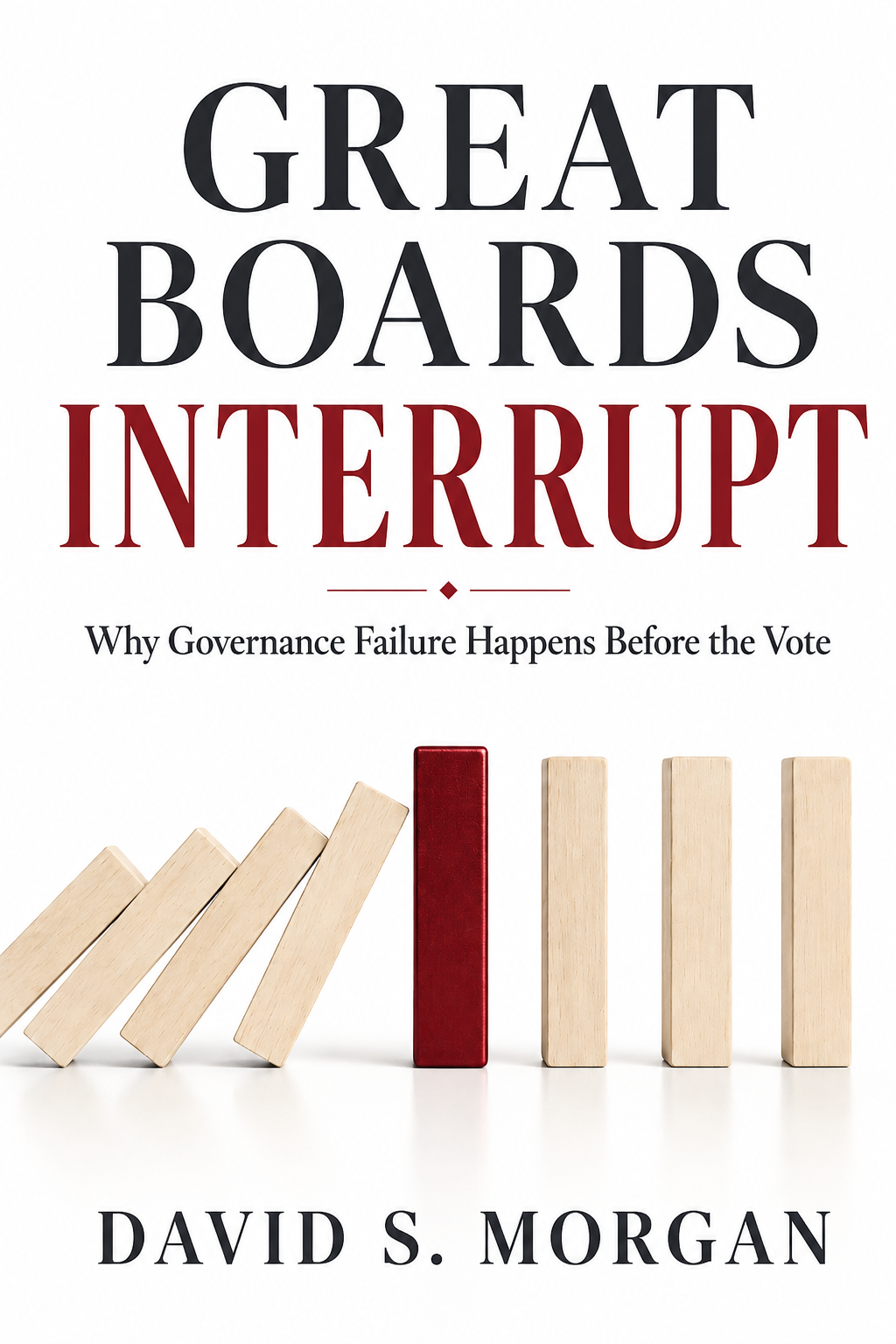
Great Boards Interrupt argues that the deepest work of a board is not simply oversight, compliance, or decision-making, but the disciplined interruption of premature closure. Through a layered examination of boardroom failure, the book shows how capable, well-intentioned directors can still miss the moment when a hard question needs to be held open. Written for chairs, directors, CEOs, and governance leaders, it offers a humane and practical account of how boards can make difficult issues sayable, protect genuine judgment, and build rooms strong enough to hold consequential decisions before they close too soon.
Read blog

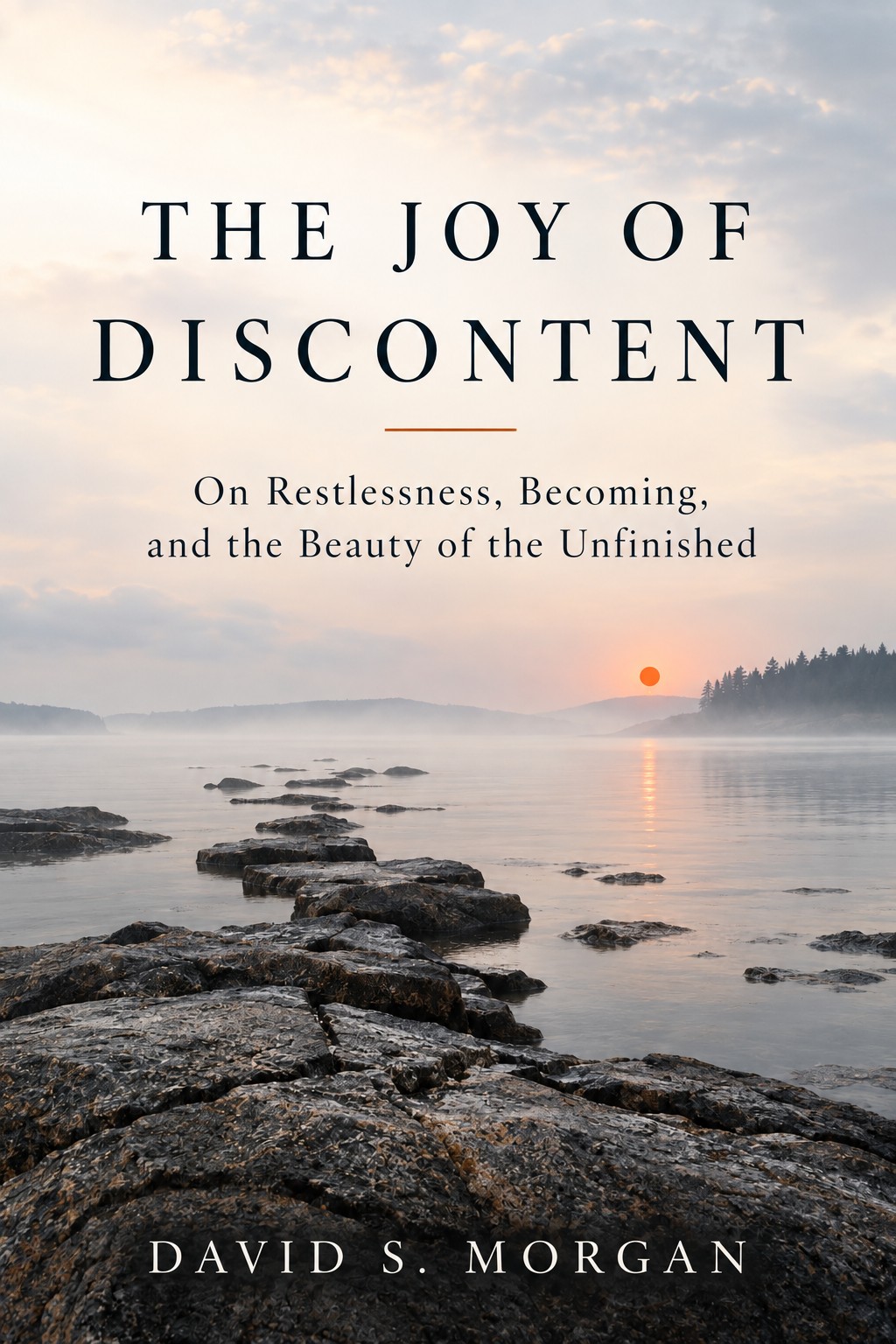
The Joy of Discontent

The Joy of Discontent A soulful guide to embracing restlessness, reframing creative unease, and finding beauty in the unfinished Revised and expanded edition What if the ache of "not quite there yet" isn't a flaw to fix? What if it's information? Most books about restlessness tell you to trust it. This one asks you to read it first. Sometimes the stirring inside you is a compass, pointing toward work that matters. Sometimes it is exhaustion, or grief, or the plain truth that something in your world should change. Learning to tell the difference is the beginning of a creative life. David S. Morgan writes as someone who stood at his own book launch, after twenty years of wanting exactly that moment, and felt the question arrive anyway: Is this it? The Joy of Discontent grew from carrying that question rather than answering it too soon. Through reflection, story, and practice, the book invites artists, seekers, leaders, and everyday makers to a different relationship with their own unease. It honors restlessness without worshipping it, and it is honest about what following it can cost.
Read blog

ART is Leadership

An exploration of leadership as formation rather than performance—where judgment, presence, and responsibility take precedence over technique and optimization.
Read blog

Adjacent &
Exploratory Works

These books inhabit threshold conditions without carrying responsibility
for defining the canon.They are expressive, reflective, and exploratory in form—often narrative,
poetic, or situational.

SEE ALL MY BOOKS ON AMAZON

Maple and Brick

Compelling and heartwarming novel that captures this pivotal moment through the eyes of Bob Harrington, the CEO of a struggling manufacturing company in Peterborough, New Hampshire.
Read blog

GOALS

Offers a groundbreaking approach to goal-setting that combines cutting-edge psychology, neuroscience, and practical strategies.
Read blog

Unstuck

Transform exhaustion into sustainable energy. Turn perfectionism into purposeful action. Discover the four-stage cycle that moves you from friction to flow.
Read blog

Ten Steps to Innovating Your Nonprofit

Drawing on two decades of experience across the nonprofit, manufacturing, and tech sectors, David S. Morgan presents a practical, actionable guide to driving innovation in mission-driven organizations.
Read blog

Einfühlung

Reclaiming the radical power of empathy in a world that’s lost its feel.
Read blog

Flip the Twitch

In our age of relentless change and AI acceleration, the leaders who thrive aren't those with perfect plans—they're those who notice what others miss, question what others assume, and act while others hesitate.
Read blog

AI-Proof Manifesto

In AI-Proof Manifesto: The New Rules of Work in the Age of Intelligent Machines and the Seven Superpowers to Rewrite Your Rules, David S. Morgan dismantles the career-sabotaging myths of the AI era—and delivers a bold, actionable guide for anyone ready to future-proof their value.
Read blog

Generation Innovate

The future of business is here—and it’s being driven by the unstoppable creativity and innovation of Millennials and Gen Z. In Generation Innovate, you’ll discover how these digital natives are reshaping industries, transforming the workplace, and leading the creator economy revolution with a bold, empathetic approach.
Read blog

Tending to Our Fire

A reflective work on sustaining meaning, care, and human continuity over time.
Read blog

Designing in the Dark

A meditation on leadership, creativity, and action when direction is unclear and certainty never arrives.
Read blog

SHAKER

A narrative exploration of endurance, belief, and reorganization inside a closed world under strain.
Read blog

How to Read This Body of Work

Readers new to this work may wish to begin with the Threshold canon.
Readers already living inside threshold conditions may find recognition and resonance in the exploratory works.
There is no required sequence.
There is a shared center.