Leadership Insight
These essays explore how perception, interpretation, and institutional life shape what we understand, what we overlook, and what we mistake for clarity. They offer no frameworks and no prescriptions. They are not about what to do. They are about seeing what is already happening, but not yet named.

Bored? Maybe That's a Good Thing.
Bored? Maybe That's a Good Thing reframes workplace boredom not as failed engagement but as released attention: the moment one claim has loosened and the next has not yet taken hold. Its central insight is that ending boredom is not the same as renewing attention. A reach for the phone, or another meeting, or another initiative can close the open interval without giving attention anywhere worthwhile to go. The article treats that interval as a diagnostic rather than a creativity hack, argues that claim-saturated workplaces leave people overstimulated and bored at the same time, and distinguishes boredom worth holding from the kind imposed by powerlessness, which should be relieved instead. It closes with six design moves for leaders who want to waste less human attention.

Resisting Organization Cancer: Leadership When Intelligent Parts Lose Contact with the Whole
Contemporary organizations sense, decide, and act through distributed arrangements of people, AI systems, models, and routines, where cognition spreads more easily than moral answerability can be preserved. Accountable Cognition Theory explains a distinctive failure: the hollow answerability stack, where formal accountability is present yet no actor with real authority lets consequence bind its future judgment. It reframes leadership as authorization under non-omniscience, relocating leadership from character to constructed conditions that keep power answerable to the whole.
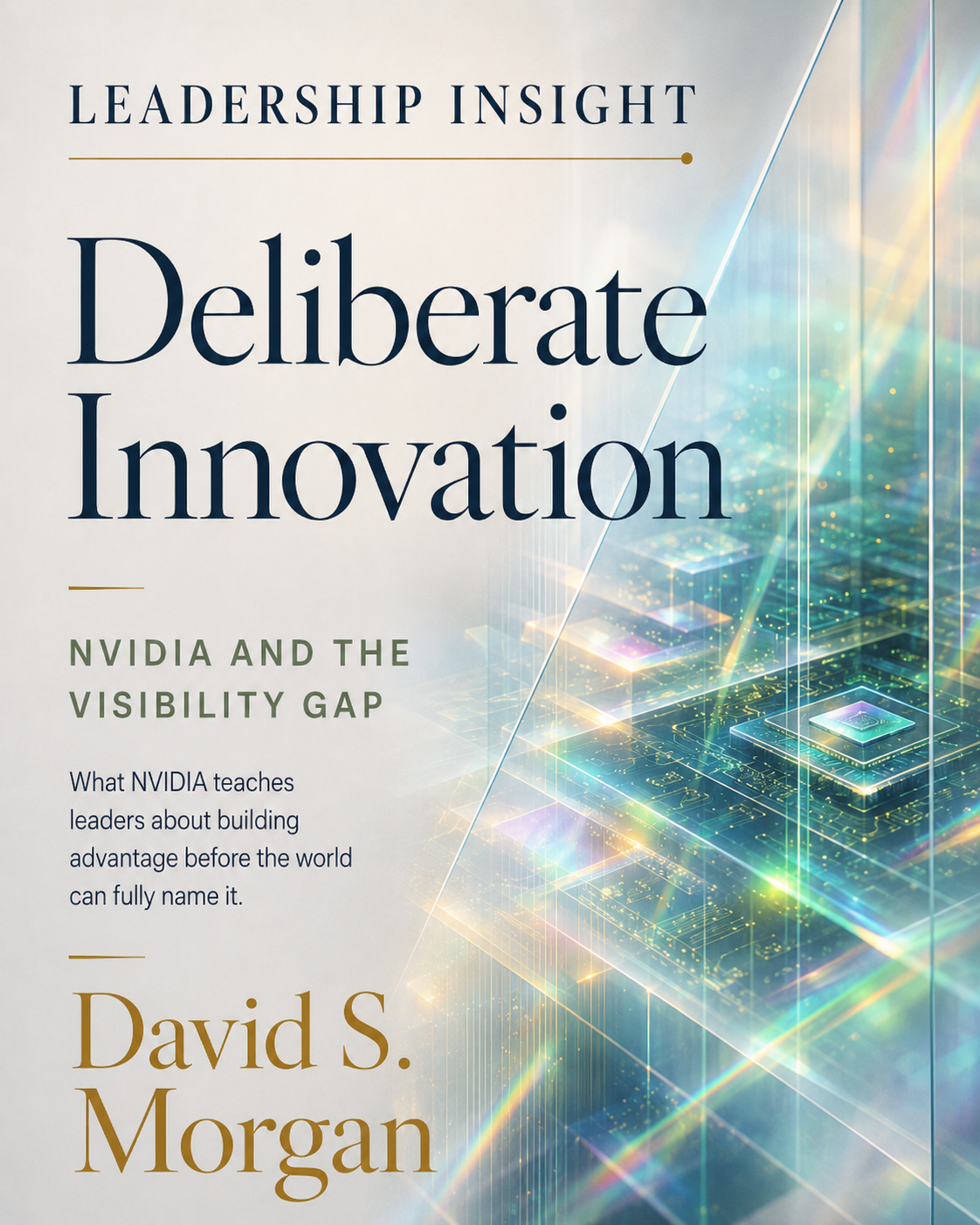
Deliberate Innovation: NVIDIA and the Visibility Gap
NVIDIA was visible for two decades before it became legible. The market saw the company clearly yet read it through an outdated category, classifying an emerging artificial-intelligence infrastructure platform as a graphics and gaming chipmaker. This Leadership Insight explains why recognition lags formation, and why it corrects abruptly rather than gradually. Drawing on the working paper Visible Before Legible, it traces a four-stage sequence (category inheritance, category inadequacy, threshold recognition, and threshold consolidation) and translates it into signals leaders, boards, and investors can watch: specialist adoption ahead of the mainstream, advantage spread across segments, ecosystems forming off the income statement, and cost borne under an inadequate category.

Great Boards Interrupt: Why Governance Failure Often Happens Before the Vote
Most serious board failures are not failures of decision quality. They are failures of issue formation, and they happen before the vote, in the interval where a consequential matter quietly becomes a foregone conclusion that needs only ratifying. This Leadership Insight argues that a board, at its best, is not a decision room but an interruption room: its central work is to keep a matter open just long enough to become genuinely decidable, rather than swallowing it whole under the social pressure to converge. It distinguishes interruption from delay and from obstruction, shows why well-resourced, process-compliant boards still close prematurely, and explains how undigested governance material does not disappear but relocates, returning later as the crisis no one saw coming. Three habits separate boards that interrupt from boards that swallow whole: the chair's question, the conversion test, and the discipline of distance.
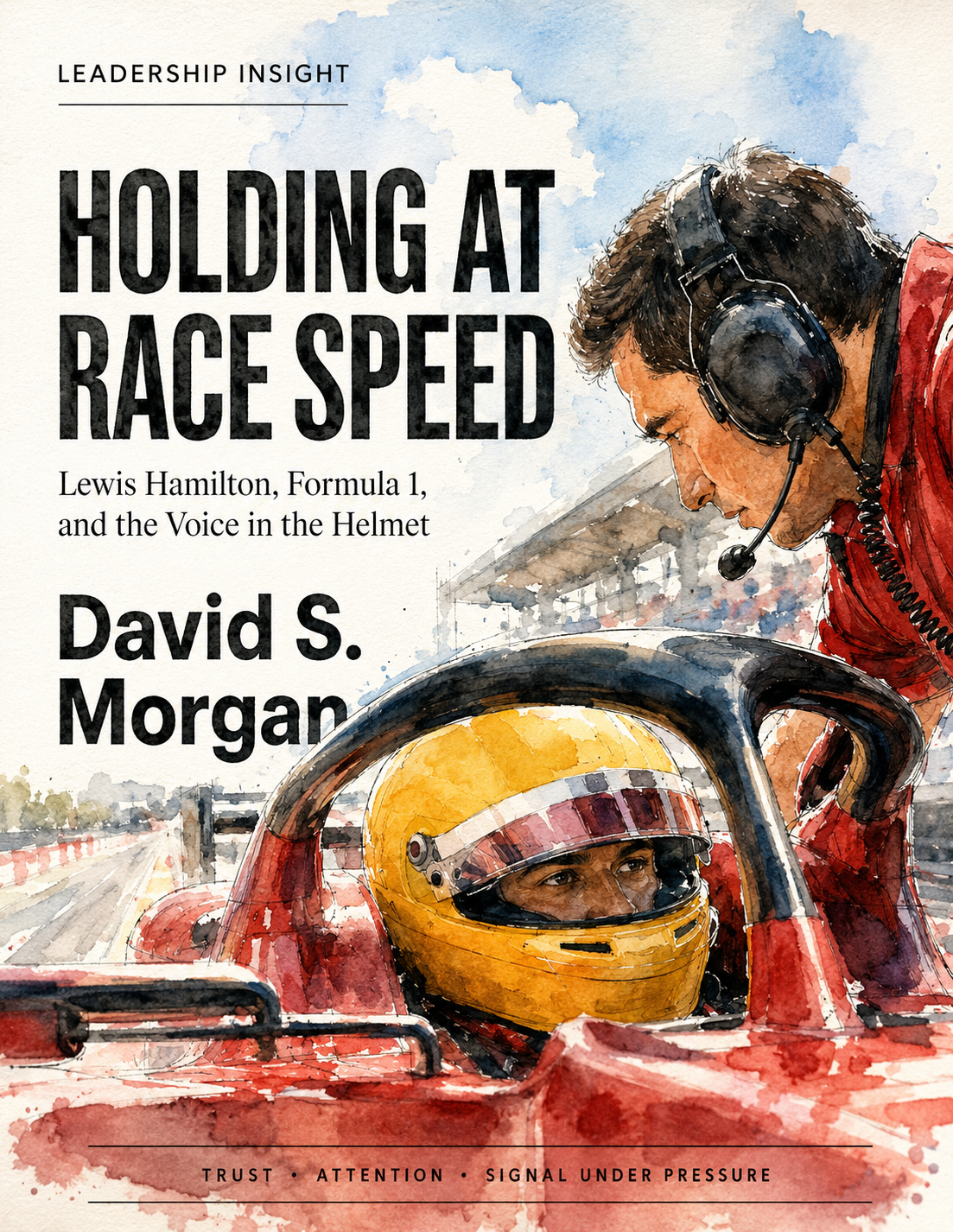
Holding at Race Speed: What Lewis Hamilton, Formula 1, and the Voice in the Helmet Reveal About Signal Under Pressure
Elite performance under pressure is routinely credited to the visible performer, yet it is rarely produced by that person alone. This practitioner article develops the construct of holding, the disciplined preservation of signal under pressure, through Formula 1 and the relationship between a driver and the voice in the helmet. Taking Lewis Hamilton's 2026 resurgence at Ferrari, and the change in his race engineer relationship that accompanied it, the article argues that what becomes usable under pressure is not speed but the conditions that let speed express a choice rather than a reflex: a stabilized reading of the situation, the relevant features still in view, and the live alternatives not yet collapsed into one. The race engineer is examined as a holding structure that filters complexity into action, regulates emotion without denying it, builds the trust that lets a few words carry weight, and fails when a system forces an unmetabolized decision through a human interface in real time.

Innovating Against Memory: Ferrari, the Luce, and the Identity Load of Change
Incumbent organizations facing technological discontinuity are usually analyzed through the logic of disruption, which explains why established firms fail to pursue emerging technologies in time. Yet some incumbents pursue the new technology deliberately and still encounter fierce resistance. The 2026 unveiling of the Luce, Ferrari’s first fully electric car, illustrates this second and less examined problem. Critics did not doubt Ferrari’s engineering. They questioned whether the car was still a Ferrari at all. This paper introduces identity load, the accumulated symbolic, sensory, relational, and market meaning an organization must carry when attempting strategic change.

From Access to Agency A Tactile Learning Ecology for Braille and Blindness Education
Cohorts of children who are blind have arrived at adulthood without the bidirectional braille literacy that anchors lifespan agency, and longitudinal evidence documents the cost in adult workforce outcomes. The field has had the relevant literatures for decades but has lacked integrated analytical apparatus for evaluating whether ecological conditions are supporting braille literacy development or substituting for it. This article proposes the construct of a tactile learning ecology to provide that apparatus. The construct is organised around a foundation-and-layering developmental architecture in which the tactile-coding foundation must develop bidirectionally and lock to fluency before complementary sensory modes layer over it as supplements rather than substitutes. A three-category evaluative vocabulary distinguishes foundation-supporting, layered-supplementing, and foundation-undermining deployments. The apparatus is applied to contemporary tactile learning devices, to audio-based substitution, and to AI-mediated accessibility. Implications follow for teacher preparation, technology design, and research.
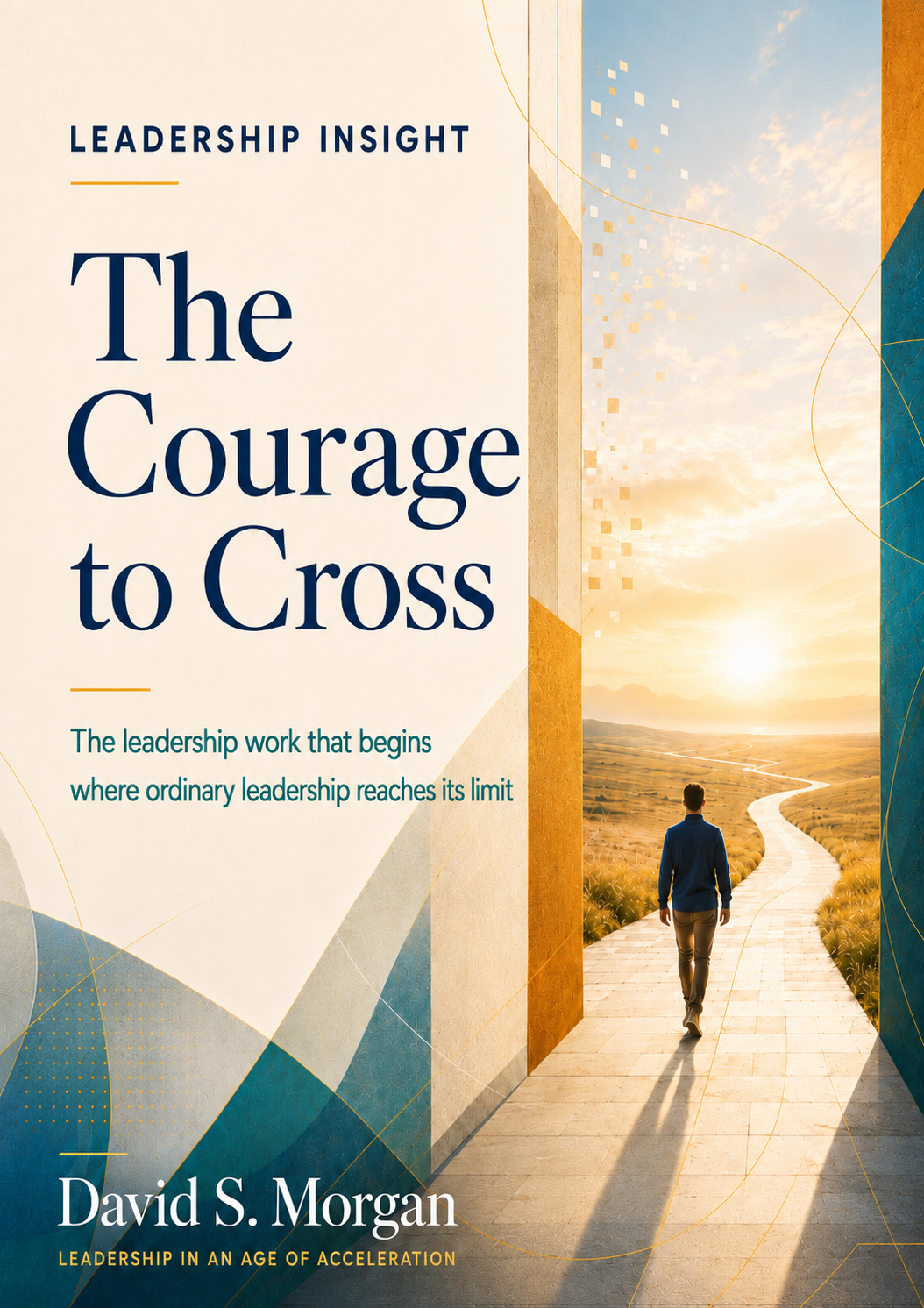
The Courage to Cross: The leadership work that begins where ordinary leadership reaches its limit
Most leadership training prepares leaders for pressure. The Courage to Cross addresses what leadership requires when pressure exceeds the self that leads — the threshold conditions where strategy, role, body, relationship, or mission no longer hold. A Leadership Insight on holding, metabolizing, and reorganizing when return is no longer possible.

The Discipline of Holding: What Pope Leo’s First Year Teaches Us About Leadership in an Age of Compression
Most leadership failures begin with premature closure: pressure mistaken for clarity, action taken before the situation has fully formed. This paper proposes a different leadership discipline, called holding, defined as the active preservation of the interval between signal and response in which authentic choice can form. Pope Leo XIV's first year as pontiff is examined as a case study in which holding becomes visible at three scales: language (the choice to call his predecessor beloved), voice and register (the prayer at the April 11, 2026 vigil for peace), and time (the ten-month silence on the most consequential personnel decision of his pontificate). Holding is not temperament. It is a practiced discipline, formed long before the moment of public test arrives.
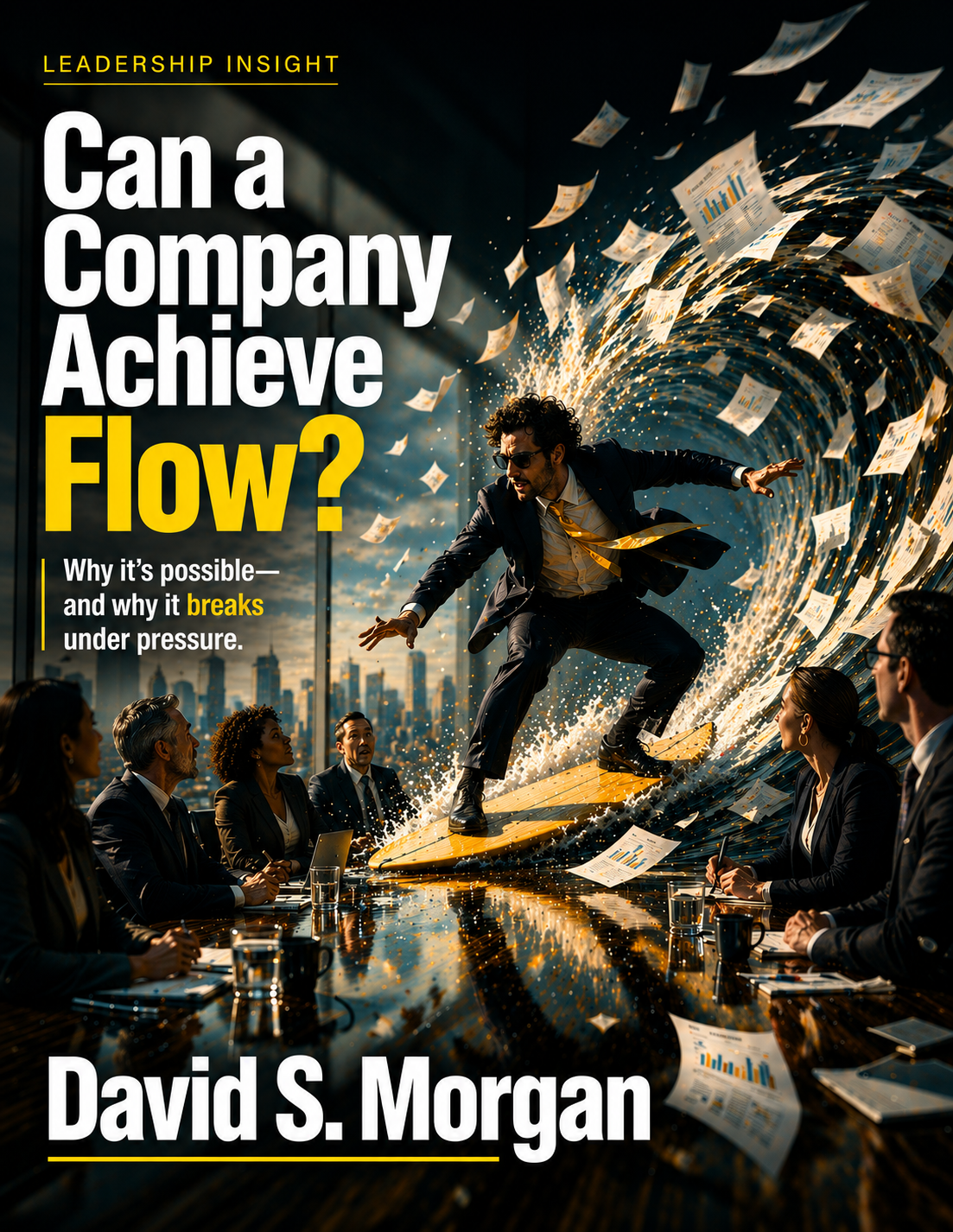
Can a Company Achieve Flow: Why its Possible-and Why it Breaks Under Pressure
The article argues that companies can experience a form of organizational flow, but unlike individual flow, it depends on preserving the capacity to think together under pressure rather than simply moving faster. It warns that leaders often destroy this flow by compressing deliberation, reducing real alternatives, and forcing premature closure—causing coordination to break even when performance still looks strong.
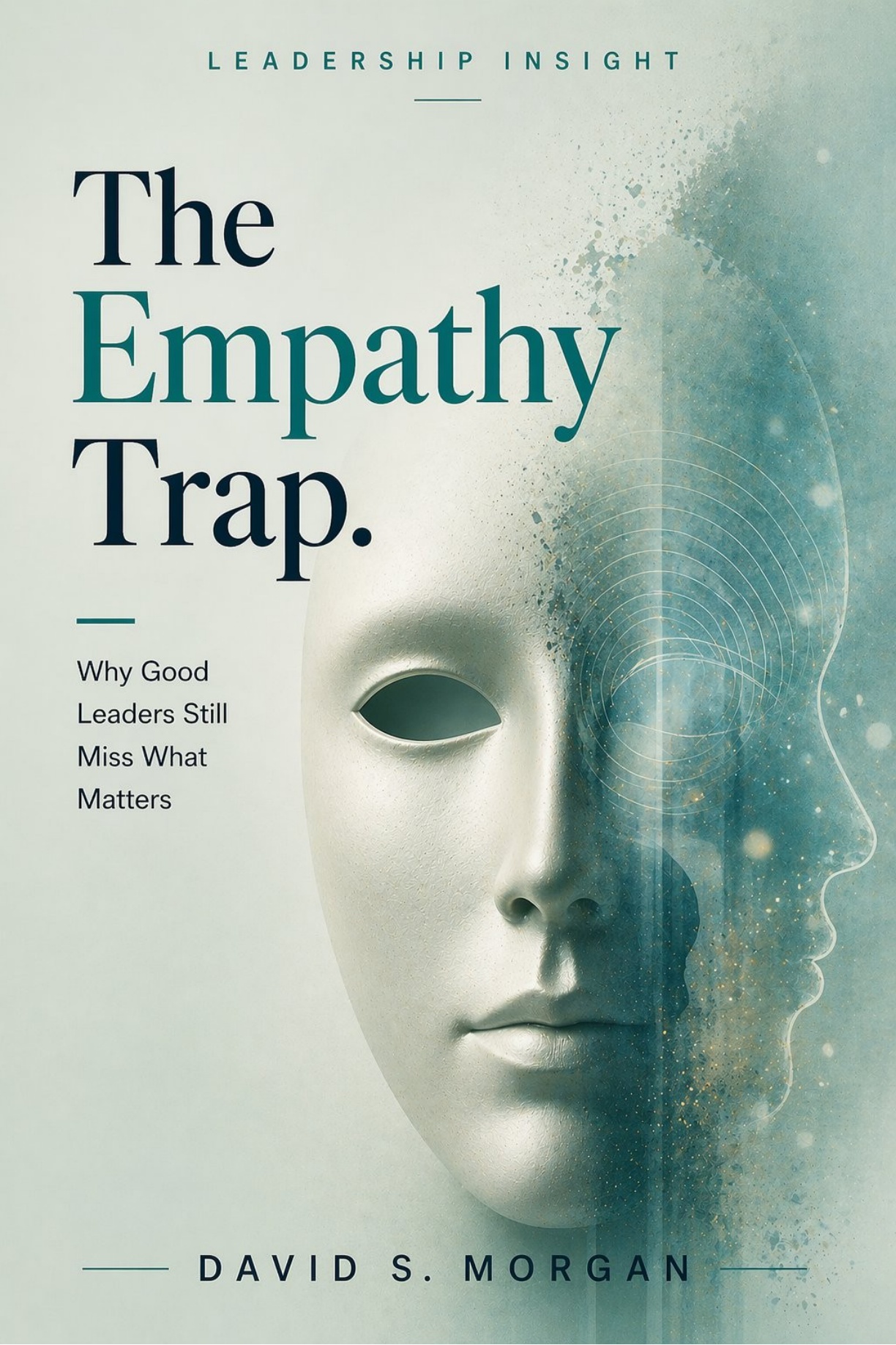
The Empathy Trap: Why Good Leaders Still Miss What Matters
The article argues that empathy, as commonly practiced in organizations, often arrives too late—after weak signals have already been filtered, softened, or made safe. It calls leaders to recover a stronger form of empathy: sensing reality earlier, feeling into what is emerging, and acting on what that perception obligates.
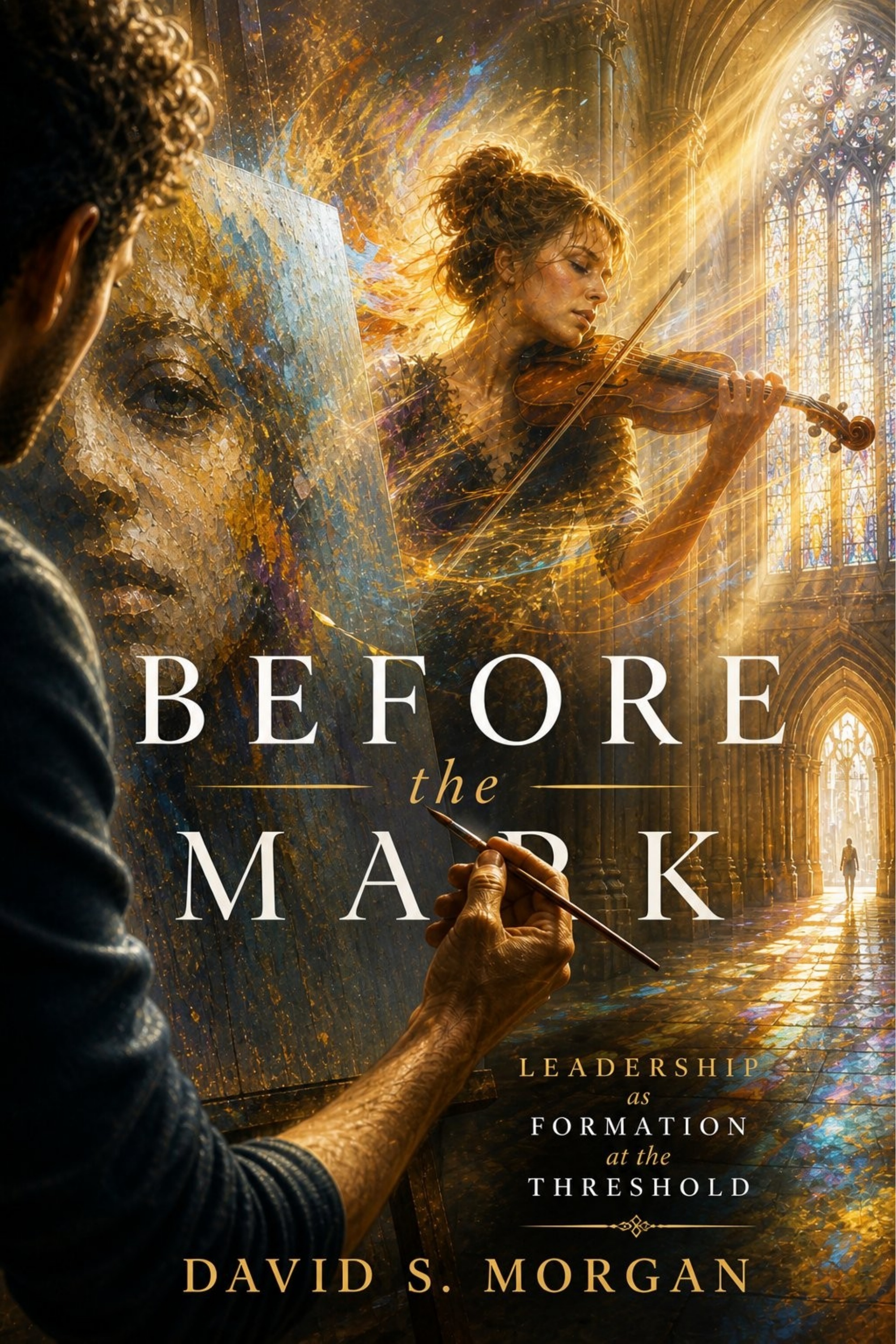
Before the Mark: Leadership as Formation at the Threshold
This article argues that the most consequential part of leadership often happens before the visible decision: in the brief interval where a leader holds tension long enough for a more durable response to form. Using the artist and musician as mirrors, it reframes leadership not as fast performance, but as formation under pressure.